

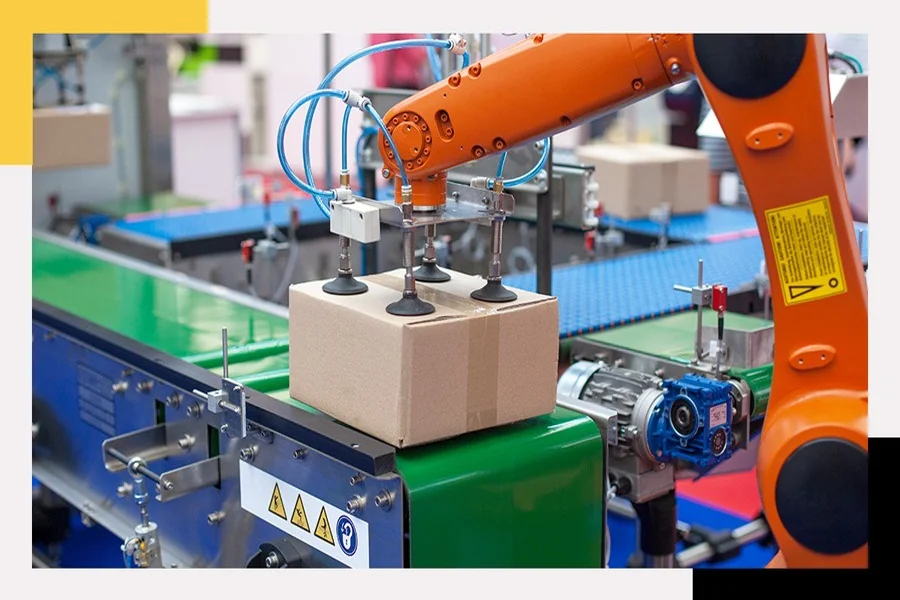
Order accuracy determines warehouse profitability more than most operations managers acknowledge. A single mispicked item triggers return shipping costs, restocking labor, customer service time, and potential revenue loss from dissatisfied buyers. These compounding expenses make picking accuracy the most critical metric in modern fulfillment operations.
Traditional barcode scanning systems provide verification but fail to prevent the fundamental error—selecting the wrong item. Operators scan products after picking, creating a detection lag that wastes time when mistakes occur. This reactive approach leaves warehouses accepting 1-3% error rates as unavoidable operational reality.
Visual intelligence technology fundamentally changes this equation. By implementing computer vision services that verify items before they enter shipping containers, warehouses achieve error rates below 0.2%—an 85% reduction from industry baselines.
Contents
The Hidden Economics of Picking Errors
Research published in the International Journal of Physical Distribution & Logistics Management quantifies mispick costs at $50-75 per incident when accounting for all downstream impacts. High-volume fulfillment centers processing 50,000 orders daily face potential daily losses exceeding $100,000 from picking inaccuracies alone.
Peak season operations amplify this problem. During holiday periods, temporary workers with minimal training handle increased order volumes. A study from the Journal of Operations Management found that picking error rates increase 40-60% during peak periods compared to baseline operations.
Returns processing consumes resources that could support growth initiatives. The reverse logistics burden includes inspection labor, inventory restocking, system updates, and disposition decisions. MIT Center for Transportation & Logistics research indicates that returns handling costs average 20-30% of the original order value.
Real-Time Verification Transforms Accuracy
Computer vision systems mounted at picking stations analyze items as operators select them. Cameras capture multiple angles simultaneously, comparing physical characteristics against order specifications in milliseconds. This instant feedback loop prevents errors before packing occurs.
The technology distinguishes between visually similar SKUs that confuse human pickers. Products with identical dimensions, similar packaging colors, or minor label variations become reliably differentiated. Research from the IEEE Transactions on Automation Science and Engineering demonstrates that vision-based verification achieves 99.8% accuracy across product catalogs exceeding 100,000 SKUs.
Integration with warehouse management systems creates closed-loop verification. When the system detects a mismatch, it alerts operators immediately and logs the discrepancy for quality analysis. This real-time data collection identifies systematic issues like confusing bin locations or problematic product placement.
Deployment Across Warehouse Configurations
Mobile picking carts equipped with tablet-mounted cameras extend visual verification to aisle operations. Pickers receive instant confirmation without returning to fixed verification stations. This mobility maintains picking velocity while enforcing accuracy standards.
Pack stations benefit most dramatically from vision integration. As operators place items into shipping boxes, overhead cameras verify contents against packing slips. A case study published in the Journal of Business Logistics showed that pack station vision systems reduced shipping errors by 92% within 30 days of deployment.
Conveyor-based sortation systems incorporate inline scanning that photographs every passing item. These high-speed cameras operating at 200-300 frames per second ensure accurate routing to shipping lanes. Misrouted packages trigger automated diversion before leaving the facility.
Training Requirements Drop Substantially
New hires reach full productivity faster when technology provides error prevention rather than relying solely on experience. Training periods compress from 2-3 weeks to 3-5 days because operators receive immediate corrective feedback during learning phases.
Language barriers become less problematic. Visual confirmation systems communicate through images and simple color coding rather than text-heavy interfaces. This universal communication method supports diverse workforces without extensive translation requirements.
Seasonal workforce ramp-up happens smoothly. Temporary workers achieve accuracy rates comparable to experienced staff because the system compensates for knowledge gaps. This consistency maintains service levels during the most critical revenue periods.
Performance Metrics Validate Investment
Warehouses track verification throughput to ensure technology doesn’t create bottlenecks. Modern systems process verification in 0.3-0.8 seconds per item, maintaining pick rates of 120-150 units per hour. This speed matches or exceeds traditional barcode scanning while delivering superior accuracy.
False rejection rates measure system reliability. Well-calibrated installations generate false positives below 0.5%, minimizing operator frustration and maintaining trust in the technology. Continuous model refinement based on operational data keeps false rejection rates consistently low.
Cost per prevented error demonstrates ROI clearly. When dividing system costs by errors eliminated, warehouses typically achieve breakeven within 6-9 months. Subsequent operational years deliver pure profit through sustained error reduction.
Visual verification technology has moved from experimental to essential for competitive warehouse operations. The 85% error reduction represents the difference between profitable growth and margin erosion in today’s tight fulfillment economics. Explore deployment options for your facility configuration to begin eliminating costly picking errors.
